


A Historic Gem With A Purpose
PHOTOGRAPHY TERESA RAFIDI
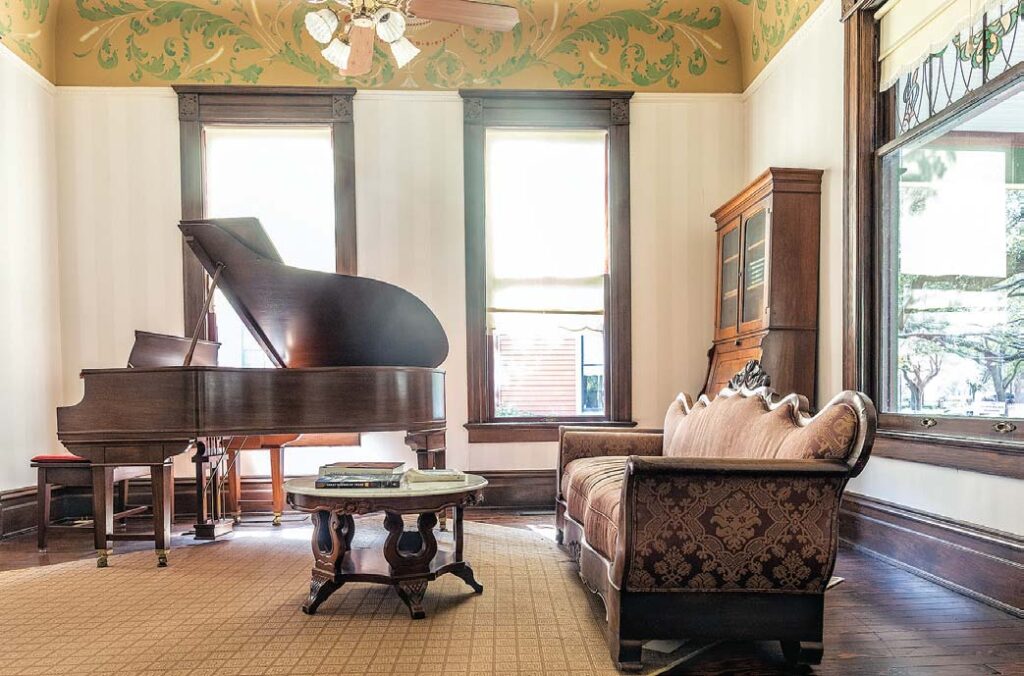
Long hidden in plain sight, the Wilson District is about to gain notice thanks to The Meadows Foundation and its nonprofit partners, who work to improve lives and build community.
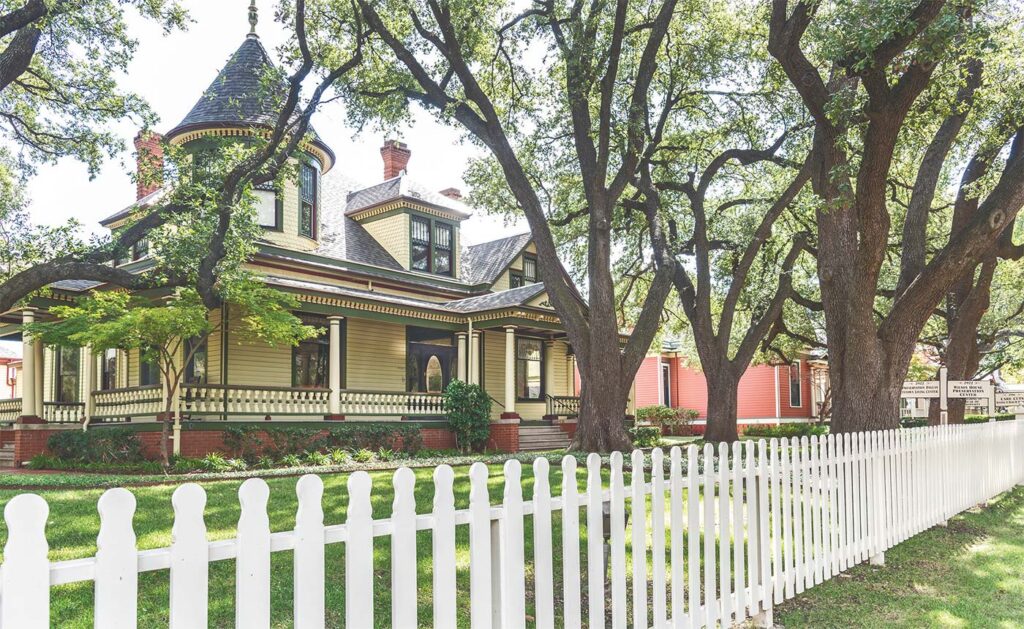
For over 70 years, members of the Wilson family lived at 2922 Swiss Ave., now home to Preservation Dallas.
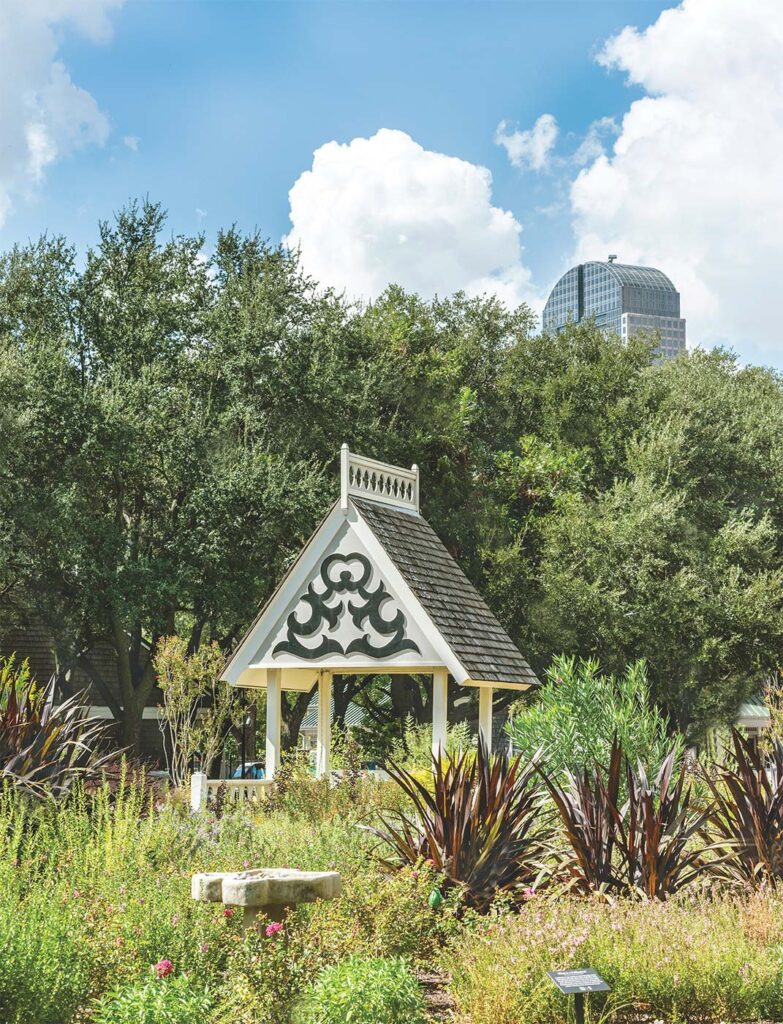
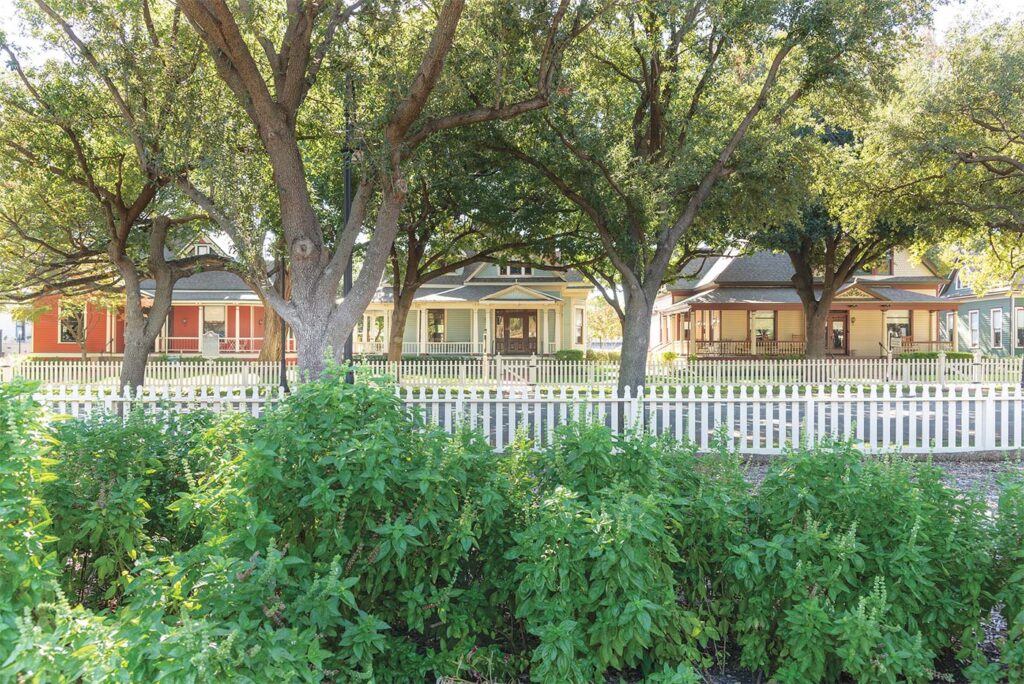
Stroll around the Wilson Historic District and imagine yourself a time traveler transported to Dallas circa 1899. Here, lively Victorian homes with carriage houses and red brick walkways are nestled behind tidy picket fences. Flowering paths, a bench swing and a vibrant vegetable garden embellish the neighborhood park that buzzes with honeybees and butterflies.
Above the district’s canopy of trees, the Baylor University Medical Center peeks out to the east and downtown’s skyscrapers rise to the south. You’ve likely driven by this oasis tucked between Live Oak Street and Gaston Avenue without ever noticing it.
In a city that often prefers polish over patina, this historic quarter’s very existence makes it distinctive, but that uniqueness also arises from its mission and purpose. The restored neighborhood is home to 35 nonprofits—from the Visiting Nurse Association to Grow North Texas— that office here rent-free thanks to the generosity of The Meadows Foundation, one of the state’s largest private philanthropic foundations.
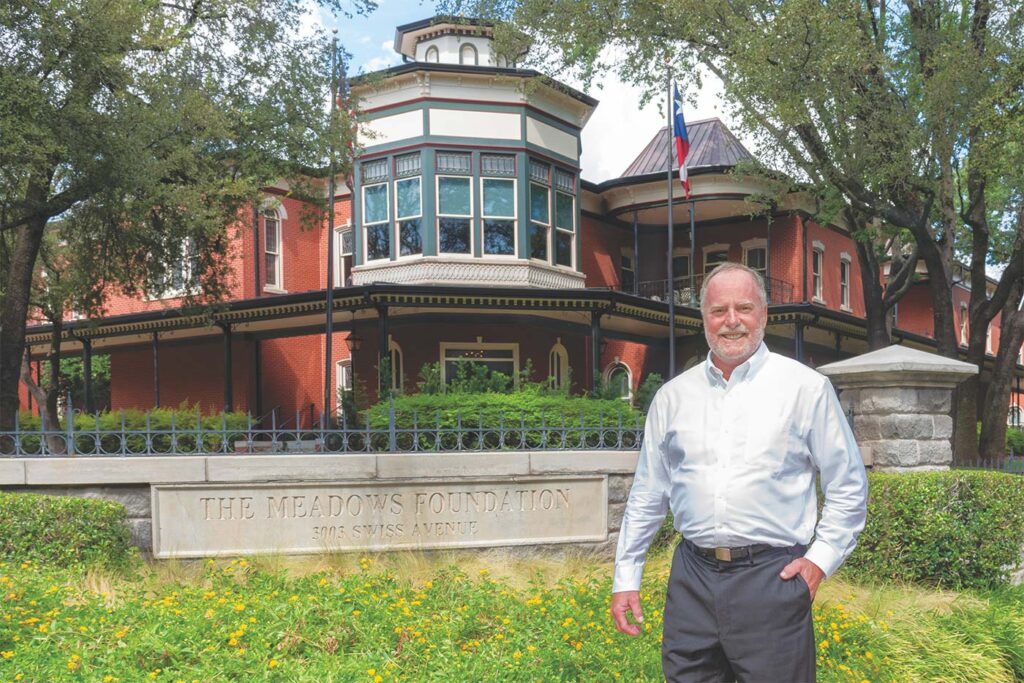
The Meadows Foundation headquarters overlooks Swiss Avenue and Oak Street, adjacent to its Victorian neighbors. On a bright autumn day, I visited Peter M. Miller, the foundation’s outgoing president and CEO, to talk about the Wilson District’s history, its future and his six-year tenure at the helm of the revered institution founded by his great-uncle, Algur H. Meadows.
“The Wilson District is a unique model,” said Miller, referring to both its historic significance and its purpose. “We started with our first property in 1981 and now have 22 acres.”
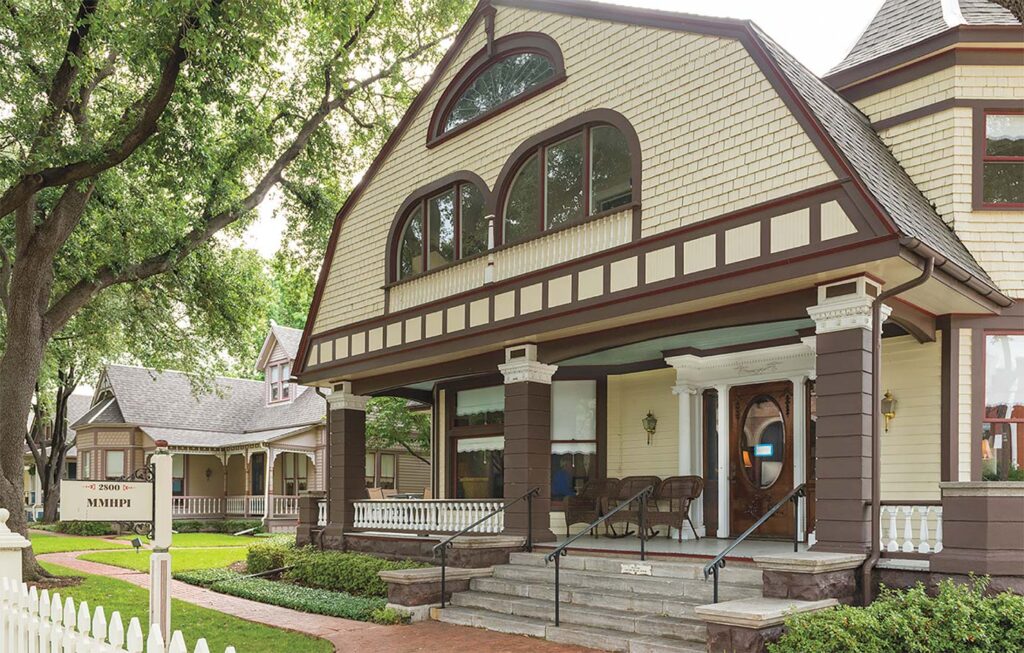
Just across the street, in Queen Anne-style splendor, the Wilson House gleams with an abundance of decorative detail. A magnificent turret rises above the home’s asymmetrical facade, multigabled roof lines and patterned shingles. The nonprofit Preservation Dallas inhabits the house today, but in 1899, cattle trader Frederick Wilson, his wife Henrietta and their children Irma and Laurence called it home. The couple acquired the entire block from Henrietta’s uncle, Swiss businessman Jacob Nussbaumer.
In addition to their home, the Wilsons built six rental houses, each with its own distinctive features. Among their neighbors were Swiss eye surgeon Dr. Theodore L.E. Arnold and his son Charles, a photographer. Henrietta’s older sister Laura lived nearby with her husband Theodore Beilharz, a prominent German stonemason, and their sons.
For decades, lives unfolded on these tree-lined streets. Children played in their yards. Neighbors waved from their porches to passing carriages. They gossiped, worked, loved and made plans. Laurence Wilson resided at 2922 Swiss Ave. for over 70 years, the last of his generation. In 1977, with his own health failing, he sold the family home.
The once-lively area had fallen into decline as mid-century Dallasites flocked to the suburbs. Developers purchased the block with an eye toward restoration but when costs became prohibitive, the Historic Preservation League (now Preservation Dallas) turned to The Meadows Foundation.
We have this unbelievable land in the middle of Dallas. In a year or two, it’s going to be vibrant. —Peter M. Miller
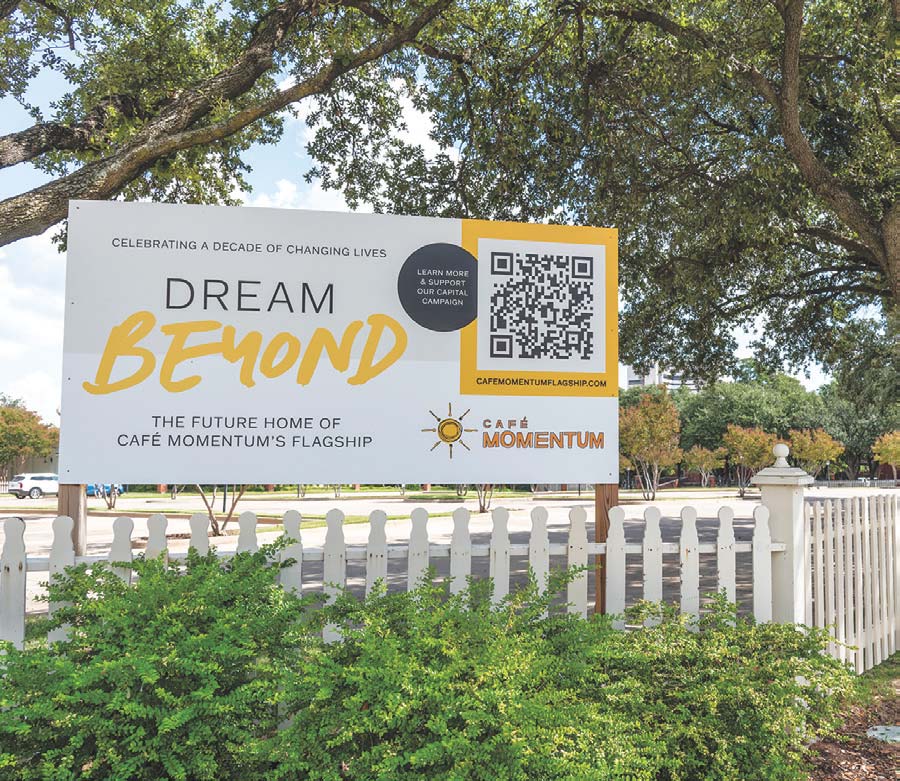
Future projects include a new home for Café Momentum to be built on an empty lot.
Serendipitously, the foundation had been contemplating a rent-free collaborative community, having long provided organizations with housing grants that siphoned funds from meaningful programming. The project would breathe new life into a historic neighborhood while solving a need for their beneficiaries.
Ignoring those who saw the houses as beyond repair, the foundation worked with architects and preservationists to bring each derelict structure back to life. “We like to think of ourselves as innovative,” says Miller. “And risk takers.”
Any organization could consider itself lucky to have the foundation supporting it.
The family’s original innovator Al Meadows and his wife Virginia began the family legacy of giving over 76 years ago. Though Meadows hailed from Georgia, he adored his adopted state, where he’d built General American Oil Company, one of the country’s largest independent oil producers at the time. A visionary, he wanted to give back to the people of Texas and improve the quality of life for both present and future generations.
Since 1948, the foundation has awarded more than $1.4 billion in grants and charitable distributions to 3,800 institutions and agencies across the state. The magnitude of its impact in the arts, education, the environment and mental health cannot be overstated.
“We’re pretty humble about what we do and don’t always seek the limelight,” says Miller. “Our grants department gets to call up organizations five times a year and change lives. How great is that?”
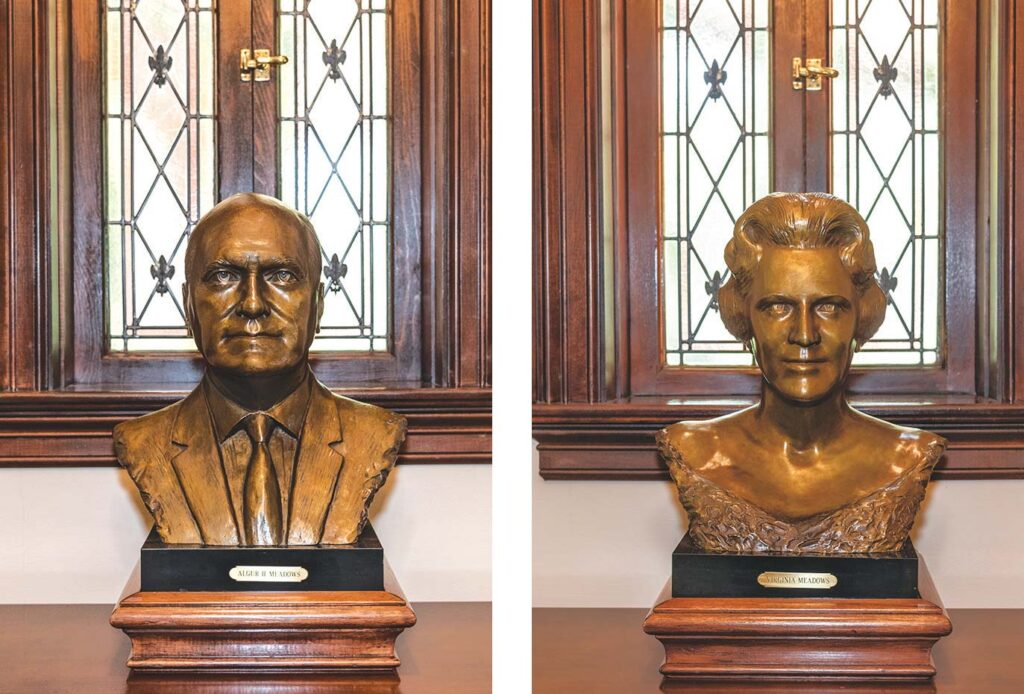
The seven branches of Meadows’ descendants are scattered from the East Coast to the West, but those who serve on the board share a common mission devoted to Texas.
“We’re people both left of center and right of center, and we don’t have tears at meetings,” says Miller. “My uncle set up the foundation to involve family. Ongoing members teach the new ones about our history. We’re on our fourth generation now, and it’s still working.”
Every new president puts his or her stamp on the foundation’s focus. Miller, who grew up in St. Louis, will return with his wife to their home in Connecticut when he turns over the reins in December. Though he jokes that some may have wondered if an outsider from the East Coast was up for the job, he has certainly made his mark. His face lights up when he talks about the plans and partnerships that he’s set in motion for the district’s next chapter. “The theme of my time here,” he says, “has been to create an eco-system of wellness.”
Clearly the district is on its way. “We have over 1,000 trees,” he says. “If you look at a drone shot, there’s concrete—and there’s here.”
The theme of my time here has been to create an eco-system of wellness. —Peter M. Miller
He tells of meeting a couple recently who had come here to take a walk. The wife was getting a transplant at Baylor, and they wanted to enjoy a moment of peace before her surgery.
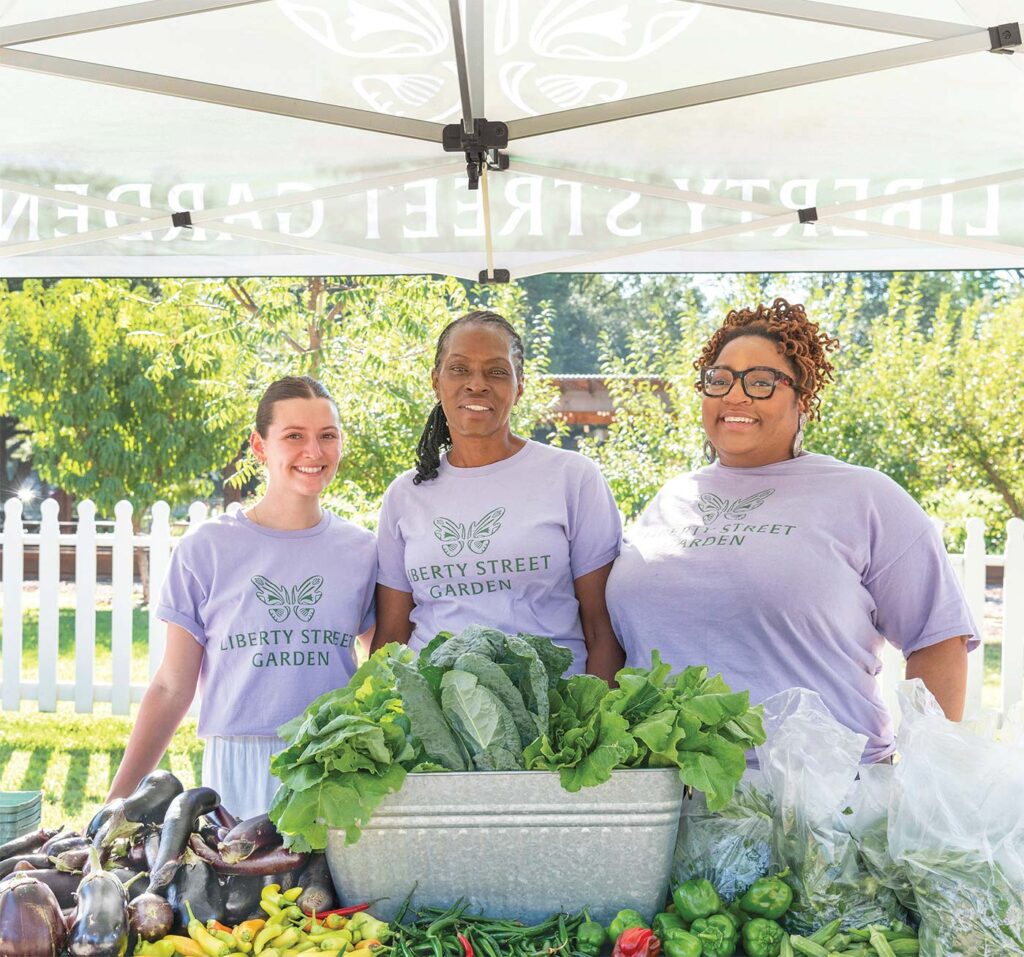
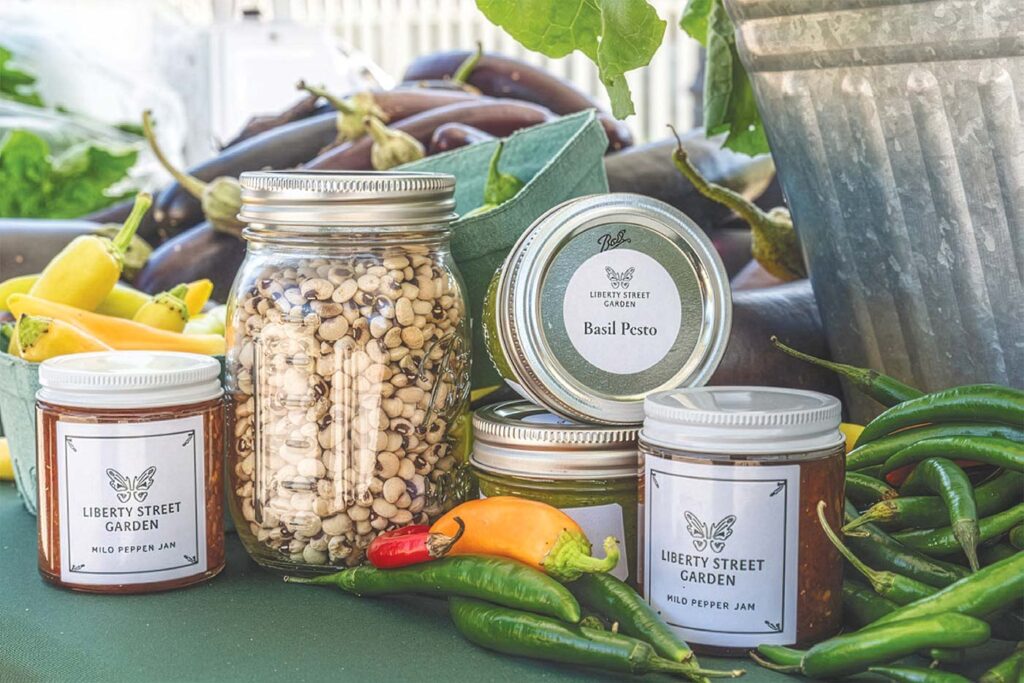
In a place so verdant, the addition of Liberty Street Garden seemed natural. The project is a joint effort with New Friends New Life, an organization aiding survivors of human trafficking, and Bonton Farms, a successful nonprofit growing food in South Dallas.
“We’re good at grants,” Miller laughs, “but when it came to creating a farm, we were in new territory.” He quickly brought on farm manager Kim High, a Master Gardener whom he describes as “amazing.”
In a separate interview, High returned the compliment. “You think big CEOs are going to be tough to deal with, but we quickly became friends. Miller recognizes that working in the dirt is therapeutic. It’s also an opportunity to learn about healthy eating.” The garden, now the centerpiece of the district, will soon add chicken coops and a welcome center for selling produce, jellies and pesto. Also on Miller’s watch, plans began for two restaurants, both of which should be familiar to longtime readers of Edible DFW.
The Dallas outpost of Hugs Café will open soon for breakfast and lunch. Like the original cafe in McKinney, the nonprofit provides meaningful employment for adults with intellectual and developmental disabilities. Dallas’s White Rhino coffee will be the drink of choice.
Another triumph is the relocation of Café Momentum, projected to open here in 2026 in a stunning 2-story, 11,000-square-foot structure encompassing dining as well as classrooms for culinary training and life skills.
The award-winning restaurant offers a fresh start to youth previously involved with the justice system.
“Café Momentum’s mission aligns perfectly with the neighborhood’s focus on wellness and restoration,” Miller said at the January groundbreaking.
Miller has also courageously tackled homelessness during his tenure, collaborating with organizations like Housing Forward and consultant Mandy Chapman Semple. “If you’re a dying homeless person, where do you go?” he asks.
To answer that need, the Visiting Nurse Association will begin converting the former Beilharz home at 2800 Swiss into a hospice center to serve that community in January 2026. The facility, the first of its kind in North Texas, will accept its first patients in early 2027.
Also in the works: a childcare center, which is being developed in partnership with Dallas College and Baylor University Medical Center. Besides serving the families of hospital employees, space will also be reserved for the children of patients receiving treatment.
“We have this unbelievable land in the middle of Dallas,” says Miller. “In a year or two, it’s going to be vibrant. People from Baylor will be getting their morning coffee from Hugs. Folks will take a walk in the garden after dinner at Café Momentum. On Saturdays, they’ll bring their children to our farmers market to buy vegetables, eggs and see the chickens. I can’t wait to come back.”
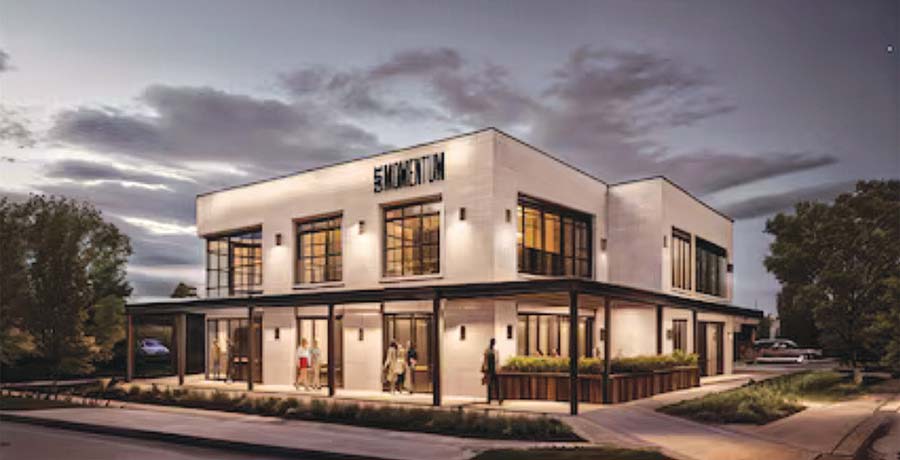
Cafe Momentum’s Wilson District location will feature a restaurant on the ground floor and classrooms on the upper level.
RENDERING COURTESY OF ABEL DESIGN GROUP
WILSON HISTORIC DISTRICT
Download a self-guided walking tour of the Wilson Historic District from the Preservation Dallas website:
www.preservationdallas.org/events/tours
Learn more about these nonprofits:
The Meadows Foundation www.mfi.org
Preservation Dallas www.preservationdallas.org
Cafe Momentum www.cafemomentumflagship.com
Hugs Café www.hugscafe.org
New Friends New Life www.newfriendsnewlife.org
Visiting Nurse Association www.vnatexas.org

As a kid, TERRI TAYLOR refused to eat her vegetables. Her veggie-phobia was cured in 1977 when she spent eight months working on farms in Norway and France. She studied journalism at UT-Austin and received a master’s degree in liberal arts from SMU. Her short story “Virginia” can be found in Solamente en San Miguel, an anthology celebrating the magical Mexican town of San Miguel de Allende. She has written for Edible DFW since its inaugural issue in 2009. She became the magazine’s editor in 2010 and is the editor of Edible Dallas & Fort Worth: The Cookbook.