





A data center developer withdraws after community backlash.
Photos by Teresa Rafidi
Rancher-winery owner Michelle Anderson and her Cedar Creek Lake neighbor, attorney Ashley Cook, didn’t pick this fight, but it wasn’t in their DNA to run from a challenge.
Anderson’s grandfather was a traveling bronco buster who broke horses for Texas ranchers in the 1930s and ’40s, and Cook descends from a veteran of the Texas Revolution. The instinct to defend their roots came naturally for these women.
The modern-day Goliath was Diode Ventures, a Kansasbased tech development company, that had quietly acquired over 1,200 acres of Henderson County pastureland, across from Anderson’s Triple N Ranch Winery and Vineyard (see story on Page 14), with the intent to facilitate the construction of a massive data center (see information below).
The plans slowly came to light last spring after county landowners began receiving unsolicited all-cash offers from out-of-state buyers with non-disclosure demands. By early May, the plans were revealed and the alarm sounded. It was a scenario few residents near this bucolic stretch of Hwy 274 and Key Ranch Road, 75 miles southeast of Dallas, could have imagined.
Standing beneath the Triple N’s arched entry, one gets a glimpse of what’s at stake. Down the long gravel drive, Anderson’s 160-acre compound spreads across the landscape with iconic Texas charm. A stately herd of longhorns grazes in a vast pasture. Her vineyard is bursting with grapes, ripe and ready for next week’s harvest.
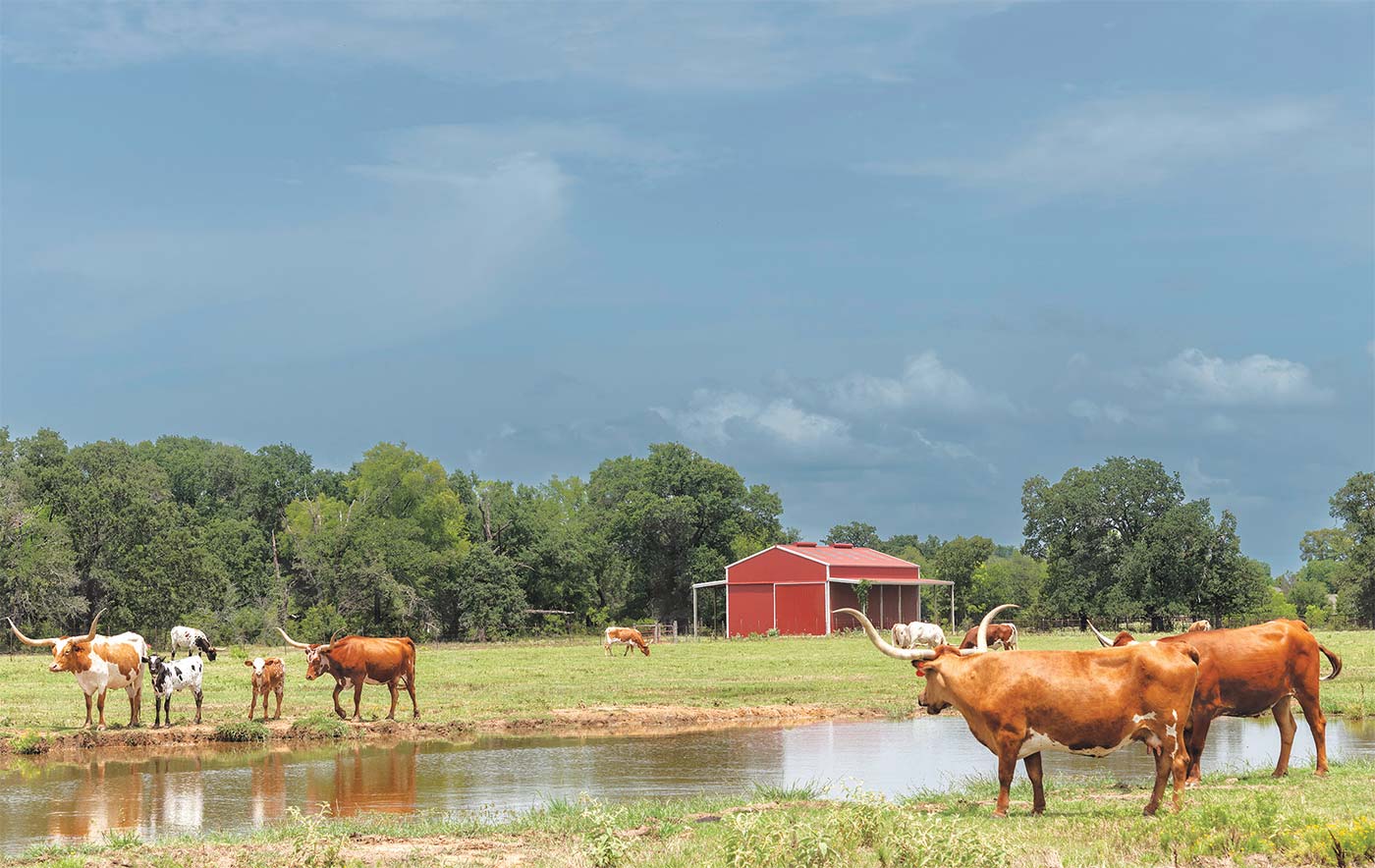
Turn 180 degrees. Step across the narrow country road dividing the ranch from the fields where Diode Venture’s concrete complex was slated to reside. It’s hard to picture the behemoth buildings buzzing 24-7 with noise and light and the exhaust from gas generators. Imagine the thirsty pipes slurping millions of gallons of lake water to cool the droning machines, and the rumble of truck convoys choking the road during the years of construction. The idea is jarring. Since 1973, Cedar Creek Lake, the state’s fourth largest reservoir, has served as the water source for Fort Worth, Arlington and much of Tarrant County. Houses and boat docks dot the 320 miles of shoreline, home to approximately 18,000 permanent residents and thousands of part-timers, mostly from the DFW area, who come to enjoy the slower pace, natural setting and recreational activities of lake life.
A diversity of aquatic and land-based wildlife also inhabits the blue-green waters, its grassy shores and marshy wetlands: bass and catfish, foxes, coyotes, deer and turtles. Herons, egrets and cormorants are plentiful, and during the spring and fall, the lake provides a critical stopover spot for migratory birds like white pelicans and even bald eagles.
“It’s not just about my longhorns or vineyard,” says Anderson. “It’s about every creature that depends on Cedar Creek. This lake is the lifeblood of our farms, our ranches and a recreational treasure. We’re seeing first-hand what this can mean.”

“It’s not just about my longhorns or vineyard … This lake is the lifeblood of our farms, our ranches.” — Michelle Anderson
For a data center developer like Diode Ventures, lured to Texas by pro-business tax incentives, the unincorporated land around Cedar Creek Lake ticked a different set of boxes: cheap acreage, minimal zoning restrictions, transmission corridors and a water source.
What wasn’t on the developer’s dance card was a passionate community prepared to resist, despite the company’s efforts to stay hidden behind non-disclosure agreements until it was too late.
For Cook, a long-time Cedar Creek property owner, the unsettling news of Diode’s plan was a gut-punch. Her house and thousands of others perch at the edge of the lake just down the road.
“The lake is a precious resource,” says Cook. “It’s disgusting that they chose this location. An industrial site doesn’t belong beside homes. Many are owned by retirees who will watch their property values plummet.”
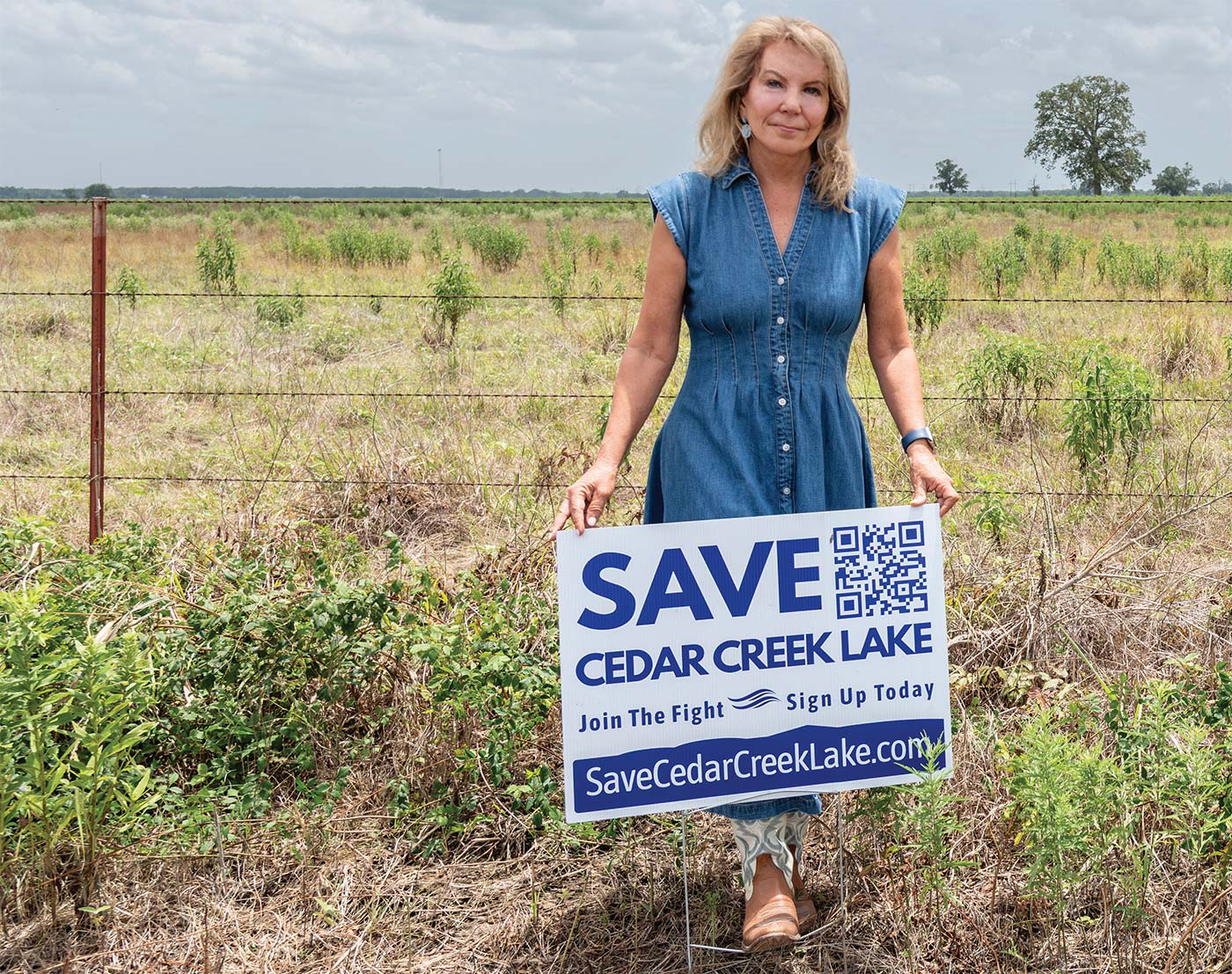
Harnessing her outrage, Cook put her legal prowess to work in May, when she and other neighbors swiftly assembled a volunteer coalition with the rallying cry “SAVE CEDAR CREEK LAKE.”
A well-designed website, savecedarcreeklake.com, laid out their arguments, which were echoed at packed community meetings in the weeks that followed. Yard signs popped up on medians and at local businesses as angry property owners jumped on board. Within a month, the group had over 3,000 signatures.
The threat had united neighbors of all political persuasions, and Diode Ventures took notice.
On July 23, in a letter to Henderson County Commissioners Court, Diode withdrew its proposal. This came in the wake of Gov. Greg Abbott’s declaration that data centers be “responsible stewards” of natural resources, power infrastructure and communities. There was a collective sigh of relief, but all eyes immediately turned to the struggles of other communities as this scenario plays out across Texas and the country.
Likened to a gold rush, the national fervor to build more and increasingly large hyperscale centers is currently fueled by the expanding role of AI and the global quest among tech companies to dominate a race with an unclear finish line.
“We want America to remain the global leader,” says Anderson, “but leadership doesn’t mean sacrificing the very resources that make all innovation possible.” Above all, she says, “before permits are issued for projects of this magnitude, people deserve clear answers: How will lakes and aquifers be protected? What happens to industrial wastewater? Who’s accountable to communities? We need transparency.”
On the Save Cedar Creek Lake website, Cook celebrates the group’s victory against Diode Ventures while warning that although they’ve won the battle, the fight is far from over.
“Everyone needs to take a step back,” she tells me. “The governor needs to order a statewide moratorium until we can do studies and make informed decisions. What is Texas if you take away the farmland, the cattle, the water? That’s how you destroy a country.”
On Aug. 3, Abbott halted approval of new data centers until regulatory agencies can audit those seeking connection to the state’s electric grid. Though it is the governor’s strongest response to slow the development of these centers, the action falls short of a full moratorium and a special session to address this crucial issue before the November midterms, as some have urged.
Cook urges all Texans to stay involved. “The only effective answer to a well-funded developer,” she says, “is a well-organized community. And these guys picked the wrong community.”
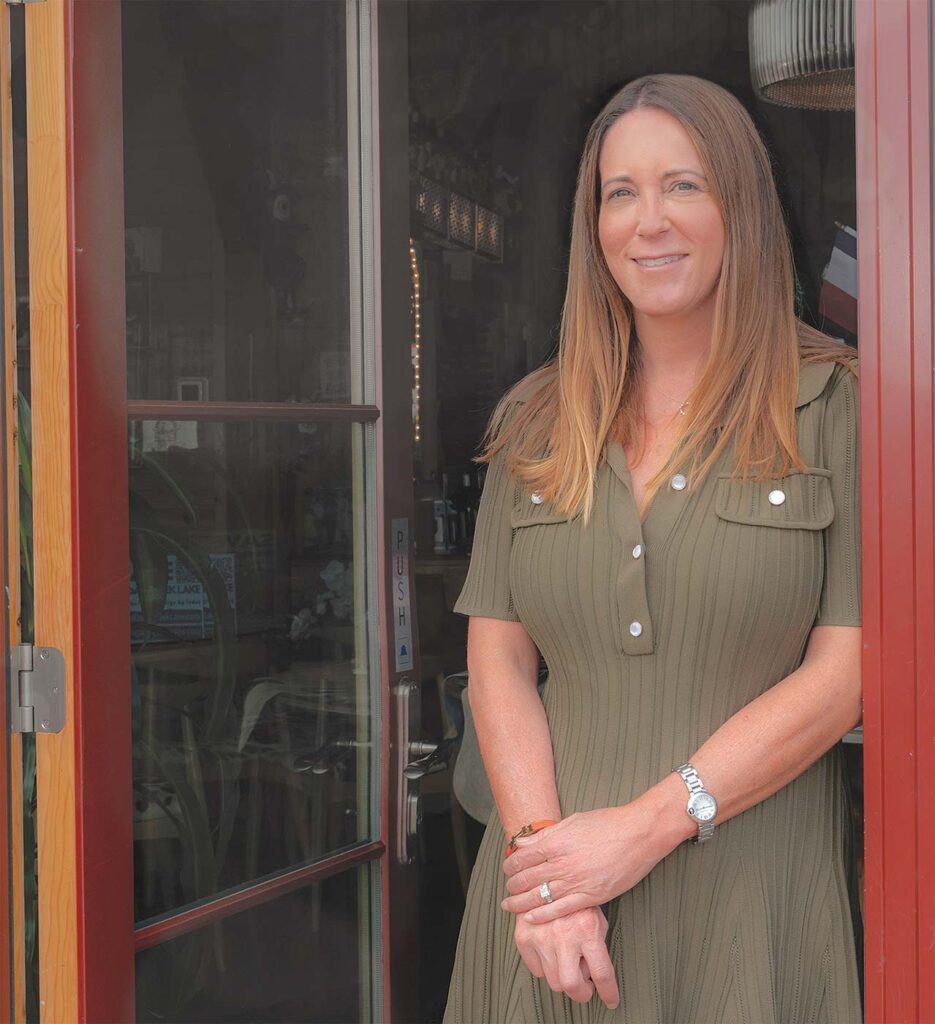
“What is Texas if you take away the farmland, the cattle, the water? tHat’s how you destroy a country. ” — Ashley Cook, attorney and a founder of Save Cedar Creek Lake
WHAT IS A DATA CENTER?
In the simplest terms, a data center physically houses massive numbers of computer servers, data storage drives and hardware for cloud providers, tech giants and any institution or company that stores digital information. According to The Texas Tribune, these centers are “the physical backbone or brain of the internet, storing and processing everything from the digital world.”
An interactive map on the Tribune’s website shows the locations of the state’s 335 data centers already in operation and the 248 in various stages of development.
By 2030, Texas is expected to surpass Virginia as the nation’s leading data center market.
For more information, follow texastribune.org for its excellent coverage on this issue crucial to our state’s future.
